
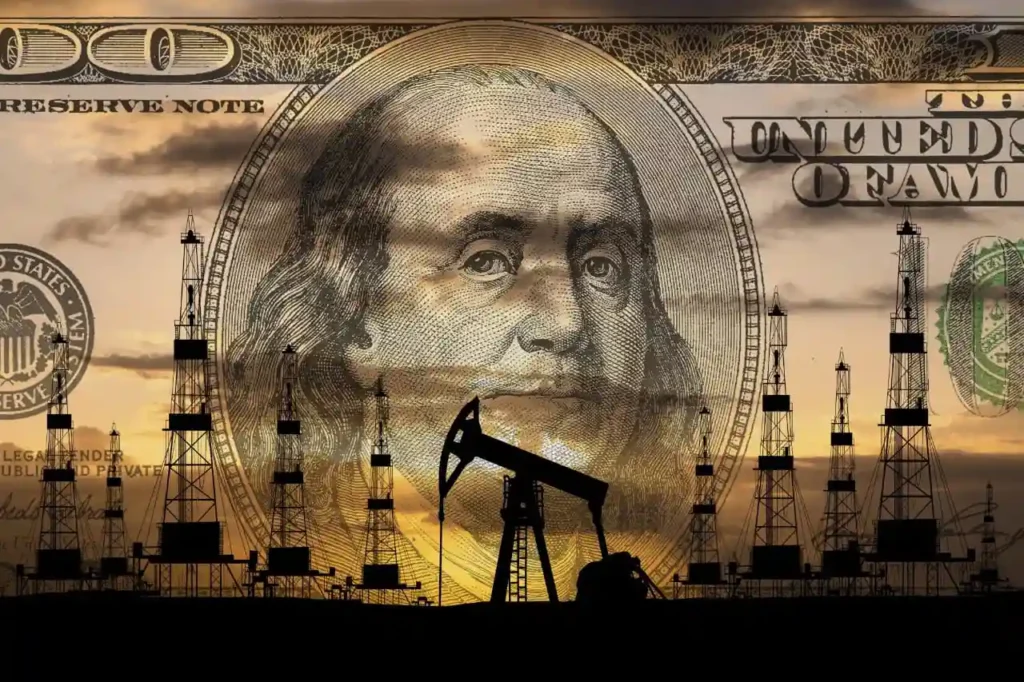
How currency choices, global oil trade, and emerging payment systems are reshaping geopolitical tensions
The Real Reason the U.S. Is Targeting Venezuela Has Nothing to Do With Drugs or Democracy
The real reason the United States is moving against Venezuela traces back to a little-known deal Henry Kissinger made with Saudi Arabia in 1974.
And it has nothing to do with drugs. Nothing to do with terrorism. Nothing to do with “democracy.” This is about the survival of the U.S. dollar itself.
For more than 50 years, American global dominance has rested on a single pillar: the petrodollar system. And Venezuela just threatened to break it.
What Just Happened — And Why It Matters
Venezuela holds 303 billion barrels of proven oil reserves — the largest on Earth.
- More than Saudi Arabia
- Roughly 20% of the world’s known oil supply
But oil alone isn’t the issue. The threat came when Venezuela began selling that oil outside the U.S. dollar system.
- In 2018, Venezuela announced it would “free itself from the dollar”
- It began accepting yuan, euros, rubles, and other currencies for oil
- It pursued BRICS membership
- It built direct payment channels with China, bypassing SWIFT
- It controlled enough oil to fund global de-dollarization for decades
That combination is what triggered alarms in Washington.
Why the Dollar Depends on Oil
In 1974, the U.S. and Saudi Arabia struck a pivotal deal:
- All global oil sales would be priced in U.S. dollars
- In return, the U.S. would provide military protection to Saudi Arabia
This created permanent global demand for dollars. Every country needs dollars to buy oil.
The petrodollar is more important to U.S. power than aircraft carriers.
And history shows what happens when leaders challenge it.
The Pattern No One Talks About
2000 — Iraq: Saddam Hussein announces oil sales will switch to euros. 2003: Iraq is invaded; oil returns to dollars.
2009 — Libya: Muammar Gaddafi proposes a gold-backed African currency.
“This gold was intended to establish a pan-African currency based on the Libyan golden dinar.”
2011: NATO bombs Libya. Gaddafi is killed. The plan disappears.
Now Venezuela
- Selling oil in yuan
- Building payment systems beyond dollar control
- Partnering with China, Russia, and Iran
- Petitioning to join BRICS
Challenge the petrodollar — and regime change follows. Every time.
The Admission Hidden in Plain Sight
“American sweat, ingenuity and toil created the oil industry in Venezuela… Its expropriation was the largest recorded theft of American wealth.”
The implication: Venezuelan oil is framed as American property because U.S. companies developed it long ago.
The Petrodollar Is Already Cracking
- Russia sells oil in rubles and yuan
- Iran trades outside the dollar
- Saudi Arabia considers yuan settlements
- China built CIPS to bypass SWIFT
- BRICS is developing dollar-free systems
- mBridge enables instant central-bank settlements
If Venezuela joins BRICS with its oil reserves, de-dollarization accelerates dramatically.
What This Is Not About
- Drugs — Venezuela accounts for less than 1% of U.S. cocaine supply
- Terrorism — no credible evidence supports the claims
- Democracy — the U.S. supports non-democratic allies elsewhere
This is about preserving the system that lets the U.S. print money while others earn it.
The Global Consequences
- Russia, China, and Iran call the actions aggression
- China risks billions in oil investments
- BRICS watches how Washington treats dollar challengers
Challenge the dollar — and you will be punished.
History Rhymes
January 3, 1990: Panama invaded, Noriega captured. January 3, 2026: Venezuela invaded, Maduro captured.
Same timing. Same justification. Same objective: control resources and trade routes.
What Comes Next
- A press conference shapes the narrative
- U.S. oil companies prepare to return
- A friendly government is installed
- Oil flows — priced in dollars
Another Iraq. Another Libya.
The Question No One Is Asking
When a currency must be defended with bombs, it is already losing.
Venezuela is not the beginning — it may be the end.